Showing posts with label Development. Show all posts
Showing posts with label Development. Show all posts
Wednesday, November 16, 2016


Monday, April 18, 2016
Squash in Naturewalk
The squash in Naturewalk has started to fruit:


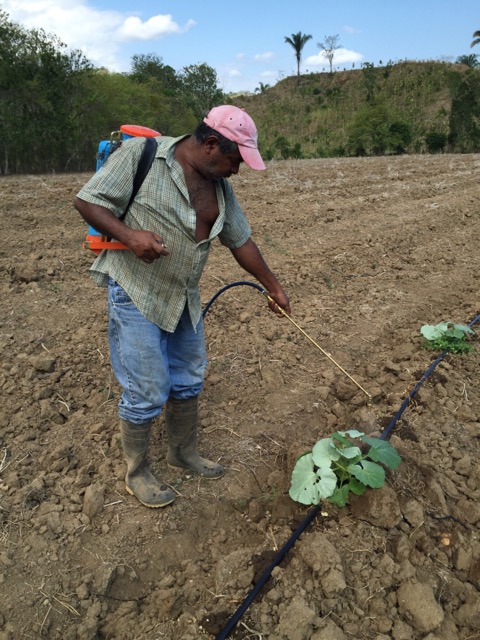
Naturewalk is a fully master-planned community in the Central Pacific region. Located in the hills it is about 10 miles from the ocean. Owners in Naturewalk can own a beautiful lot on which they can have their home and better still they can have fully managed crops growing on their land giving an income.
To find out more about Naturewalk call USA +1-202-697-9284 or Europe +353-1-272-4184 or e mail info@costaricainvest.ie
Read about Naturewalk in the New York Times here.
Friday, March 11, 2016
Thai Chilli Peppers
Thai hot chilli peppers have been test planted and grown successfully in Naturewalk. Naturewalk will soon plant acres of chilli peppers for export.
Below you can see some of the hot chilli peppers grown in Naturewalk:


Naturewalk is a fully masterplanned community in the Central Pacific region. Located in the hills it is about 10 miles from the ocean. Owners in Naturewalk can own a beautiful lot on which they can have their home and better still they can have fully managed crops growing on their land giving an income.
To find out more about Naturewalk call USA +1-202-697-9284 or Europe +353-1-272-4184 or e mail info@costaricainvest.ie
Read about Naturewalk in the New York Times here.
Friday, December 18, 2015
Electrical Substation at Naturewalk
The electrical substation close to Naturewalk has made great progress in the past 3 months and it is now almost finished. Pictures below are from September 2015 and some recent pictures from December 2015.
 |
| September 2015 |
 |
| September 2015 |
 |
| September 2015 |
 |
| December 2015 |
 |
| December 2015 |
 |
| December 2015 |
Friday, August 21, 2015
Home Construction
Below you can see some pictures of the home construction style for the new home designs in Naturewalk. The homes are timber construction on a light steel frame, giving long lasting, durable, safe construction.
This home is currently in construction by the building company but is not located in Naturewalk. The Naturewalk three bedroom home design is a much larger home:
Tuesday, August 4, 2015
Friday, May 15, 2015
Pineapple and Papaya in Naturewalk 3
Inter-cropping of crops gives diversity and a range of different income streams for clients in Naturewalk.
Below you can see some pictures of pineapple and papaya intercropped in Naturewalk 3.
Naturewalk is a master-planned development where owners can have a home and additionally benefit from income from fully managed crops growing on their land.
To find out more about Naturewalk, drop us an e mail to info@costaricainvest.ie or give us a call on
USA +1-202-697-9284 or Europe +353-1-272-4184


Wednesday, December 31, 2014
Saving the Earth Without Losing a Buck
By KEVIN BRASS DEC. 25, 2014 for the New York Times

PIEDRAS BLANCAS, Costa Rica — When he was growing up in Pennsylvania, Dave Angstadt’s favorite movie was “Swiss Family Robinson,” the story of a family living in a tree house on a deserted island.
Mr. Angstadt, 60, a business consultant and former professional basketball player, was thinking of the plucky Robinson clan recently, when he decided to invest $250,000 to build a 1,500-square-foot tree house in Finca Bellavista, a development in the jungle in southwest Costa Rica.
“Being self-sustainable, living in a tree, fending for yourself, figuring stuff out, always intrigued me,” said Mr. Angstadt, who plans to use the house as a personal retreat for friends and family.
Finca Bellavista, which is more than a mile from the nearest town and accessible only by unpaved roads, is one of several projects in Costa Rica targeting a new generation of buyers looking for an eco-friendly alternative to the second-home developments that line the coast.
While sales of second homes remain sluggish in the wake of the 2008 crash, eco-conscious buyers, primarily from North America, are playing an increasing role in the Costa Rica market, developers and sales agents say. And instead of $1 million beachfront homes, many of these buyers are interested in simpler, inland projects touting sustainable elements and with prices of $250,000 to $400,000. (Prices in Costa Rica are typically quoted in United States dollars.)

“People are more humble,” said Richard Lemire, a developer in Manuel Antonio, a centrally located community on the country’s western shore. “Big homes are not so sexy anymore.”
Buyers in eco-centric projects typically base their purchase decision on a variety of factors, including the location and the investment potential, agents say. And not all of them are solely focused on saving the Earth.
“I wouldn’t say I am an environmentalist,” said Al Molnar, 47, who bought eight acres in a project in 2012.
Mr. Molnar, who owns a sports agency in Canada, spent $260,000 for the land in NatureWalk, a combination agriculture and residential development covering 1,200 acres east of the coastal town of Jacó, Costa Rica. A buyer must agree to allow 85 percent of the land to be used for crops such as vanilla, coffee, teak and pineapple; in return, the buyer receives the bulk of the revenue from the crops and the right to build a home on the remaining land.
Mr. Molnar primarily viewed the purchase as an investment, a way to diversify his portfolio. But he plans to build a home on the property, and he considers the sustainability aspects to be a bonus. “The fact that they weren’t destroying the land to develop it into something else,” he said. “It alleviated a little guilt about how things are being done in the world right now.”
Aware of buyers like Mr. Molnar, the developer of NatureWalk, the Canadian-based PRG Group, changed its marketing strategy. Instead of focusing on the environmental aspects, the developer now emphasizes the potential revenue, catering to what the company president, Tim Alexander, calls “economic environmentalism.”
Read the full story in the New York Times HERE
Views of a tree house in the Finca Bellavista development in Costa Rica. Credit Matt Berglund
PIEDRAS BLANCAS, Costa Rica — When he was growing up in Pennsylvania, Dave Angstadt’s favorite movie was “Swiss Family Robinson,” the story of a family living in a tree house on a deserted island.
Mr. Angstadt, 60, a business consultant and former professional basketball player, was thinking of the plucky Robinson clan recently, when he decided to invest $250,000 to build a 1,500-square-foot tree house in Finca Bellavista, a development in the jungle in southwest Costa Rica.
“Being self-sustainable, living in a tree, fending for yourself, figuring stuff out, always intrigued me,” said Mr. Angstadt, who plans to use the house as a personal retreat for friends and family.
Finca Bellavista, which is more than a mile from the nearest town and accessible only by unpaved roads, is one of several projects in Costa Rica targeting a new generation of buyers looking for an eco-friendly alternative to the second-home developments that line the coast.
While sales of second homes remain sluggish in the wake of the 2008 crash, eco-conscious buyers, primarily from North America, are playing an increasing role in the Costa Rica market, developers and sales agents say. And instead of $1 million beachfront homes, many of these buyers are interested in simpler, inland projects touting sustainable elements and with prices of $250,000 to $400,000. (Prices in Costa Rica are typically quoted in United States dollars.)
Views of a tree house in the Finca Bellavista development in Costa Rica. Credit Matt Berglund
“People are more humble,” said Richard Lemire, a developer in Manuel Antonio, a centrally located community on the country’s western shore. “Big homes are not so sexy anymore.”
Buyers in eco-centric projects typically base their purchase decision on a variety of factors, including the location and the investment potential, agents say. And not all of them are solely focused on saving the Earth.
“I wouldn’t say I am an environmentalist,” said Al Molnar, 47, who bought eight acres in a project in 2012.
Mr. Molnar, who owns a sports agency in Canada, spent $260,000 for the land in NatureWalk, a combination agriculture and residential development covering 1,200 acres east of the coastal town of Jacó, Costa Rica. A buyer must agree to allow 85 percent of the land to be used for crops such as vanilla, coffee, teak and pineapple; in return, the buyer receives the bulk of the revenue from the crops and the right to build a home on the remaining land.
Mr. Molnar primarily viewed the purchase as an investment, a way to diversify his portfolio. But he plans to build a home on the property, and he considers the sustainability aspects to be a bonus. “The fact that they weren’t destroying the land to develop it into something else,” he said. “It alleviated a little guilt about how things are being done in the world right now.”
Aware of buyers like Mr. Molnar, the developer of NatureWalk, the Canadian-based PRG Group, changed its marketing strategy. Instead of focusing on the environmental aspects, the developer now emphasizes the potential revenue, catering to what the company president, Tim Alexander, calls “economic environmentalism.”
Since beginning sales in 2011, PRG has sold more than 100 lots, with prices ranging from $55,000 to $100,000 for parcels of a quarter-acre to one and a quarter acres.
“It’s not a decision based on the eco-value,” Mr. Alexander said. “They look for both, but the investment comes first.”
Eco-developments also are benefiting from the growing group of buyers in North America concerned about the state of the world economy, local industry executives say.
Osa Mountain Village Resort, located in the mountains along the southern Pacific coast, is billed as “a sustainable, fully functional, food-producing resort community.” In addition to a secluded setting and enticing swimming pools, the resort offers residents a steady supply of fresh fruits, vegetables and other food items.
The availability of an independent food supply is a key component for many buyers, said the developer, Jim Gale. “Without the food production, we’d have 80 percent less sales,” he said. “The main thing is food security.”
Osa has sold more than 100 properties in the last four years, Mr. Gale said. Sixty of the 150 planned homes have been built, with prices ranging from $69,000 for a rustic 250-square-foot house to $259,000 for a 1,200-square-foot condo with full amenities.
In 2011, Dan Lutz, a chiropractor in Minnesota, paid about $125,000 in a pre-construction deal for a 1,300-square-foot apartment. He said he made the purchase because he was concerned that the United States was on an “unsustainable trajectory.”
“As far as I’m concerned, it just made sense to have a piece of real estate where you do have a guaranteed abundance of food, you have guaranteed abundance of water,” said Mr. Lutz, 44. “We had just went through a big recession, it was kind of scary. I thought I better have a Plan B.” For now, he uses the house on vacations, and loans it to family and friends.
In Finca Bellavista, the tree house development, the developers have sold 54 of the 96 available plots, totaling 100 acres, since 2006. Lots average about two acres and are typically priced from $40,000 to $80,000, depending on the location and accessibility.
Buyers purchase the land and the right to build a house in selected trees. At this point, 12 tree houses have been built, connected to the rest of the project by narrow trails, rope ladders and zip lines. Although amenities are few, there is a fiber optic connection to the base camp, as the developers call the headquarters, for owners who are not quite ready to completely discard civilization.
Mr. Angstadt’s custom-designed tree house will have a flushing toilet and a solar-heated hot water shower, in addition to a wide deck and extra high ceilings to accommodate his 6-foot-8 frame.
“I appreciate a good hot shower and I appreciate a flushed toilet,” said Mr. Angstadt, who hopes to start construction on his tree house in early 2015. “But I’m also quite happy out there getting muddy and washing off in the river.”
“It’s not a decision based on the eco-value,” Mr. Alexander said. “They look for both, but the investment comes first.”
Eco-developments also are benefiting from the growing group of buyers in North America concerned about the state of the world economy, local industry executives say.
Osa Mountain Village Resort, located in the mountains along the southern Pacific coast, is billed as “a sustainable, fully functional, food-producing resort community.” In addition to a secluded setting and enticing swimming pools, the resort offers residents a steady supply of fresh fruits, vegetables and other food items.
The availability of an independent food supply is a key component for many buyers, said the developer, Jim Gale. “Without the food production, we’d have 80 percent less sales,” he said. “The main thing is food security.”
Osa has sold more than 100 properties in the last four years, Mr. Gale said. Sixty of the 150 planned homes have been built, with prices ranging from $69,000 for a rustic 250-square-foot house to $259,000 for a 1,200-square-foot condo with full amenities.
In 2011, Dan Lutz, a chiropractor in Minnesota, paid about $125,000 in a pre-construction deal for a 1,300-square-foot apartment. He said he made the purchase because he was concerned that the United States was on an “unsustainable trajectory.”
“As far as I’m concerned, it just made sense to have a piece of real estate where you do have a guaranteed abundance of food, you have guaranteed abundance of water,” said Mr. Lutz, 44. “We had just went through a big recession, it was kind of scary. I thought I better have a Plan B.” For now, he uses the house on vacations, and loans it to family and friends.
In Finca Bellavista, the tree house development, the developers have sold 54 of the 96 available plots, totaling 100 acres, since 2006. Lots average about two acres and are typically priced from $40,000 to $80,000, depending on the location and accessibility.
Buyers purchase the land and the right to build a house in selected trees. At this point, 12 tree houses have been built, connected to the rest of the project by narrow trails, rope ladders and zip lines. Although amenities are few, there is a fiber optic connection to the base camp, as the developers call the headquarters, for owners who are not quite ready to completely discard civilization.
Mr. Angstadt’s custom-designed tree house will have a flushing toilet and a solar-heated hot water shower, in addition to a wide deck and extra high ceilings to accommodate his 6-foot-8 frame.
“I appreciate a good hot shower and I appreciate a flushed toilet,” said Mr. Angstadt, who hopes to start construction on his tree house in early 2015. “But I’m also quite happy out there getting muddy and washing off in the river.”
Read the full story in the New York Times HERE
Growing Vegetables for Asian Markets in Costa Rica
By Jaime Lopez – December 28, 2014 for The Costa Rica Star
Farmers and grocers in Costa Rica sometimes lament certain facts of free trade and globalization; to with: A significant portion of garlic, rice and even black beans, all staples of traditional cuisine in this country, are actually imported from China. Due to the agricultural economic background of Costa Rica, some may consider this to be a trade imbalance; however, some entrepreneurs are taking this situation in stride by growing vegetables traditionally used in Asian cuisine and exporting them to that region.
The following press release is from Naturewalk Farms, a rural business community in Turrubares, located near between the Central Valley and the Central Pacific Coast.
Sustainable Organic Asian Vegetable Production Expands in Naturewalk, Costa Rica
PRLog – Nov. 18, 2014 – JACO, Costa Rica — Over the last 8 months, Naturewalk completed a test growing program, involving 6 varieties of asian specialty vegetables. The results proved very successful with crop growth and yields meeting or exceeding expectation.
These vegetables have been traditionally grown in other parts of Central America and the Caribbean for the North American market. “This is the first large commercialization program of these specialty vegetables to take place in Costa Rica” says Tim Alexander, President of Naturewalk “we are pleased to be adding this strong agricultural component to our activities at Naturewalk. This is a real win for the area in terms of jobs, employment and economic stimulus and of course we are excited to be developing this program at Naturewalk”.
The first of 4,000 Chinese, Indian and Thai eggplants are due to be shipped the third week of November from the nurseries in Grecia. Over a 4 month cycle a total of 90,000 plants will be planted to meet demand for two containers per week shipped to U.S. east coast seaports due to beginning in February 2015. Other vegetable varieties include Thai Hot Pepper, Preeti, Bangana Lina, and Greengo Cucumber.
Participating in the program with technical support and seed stock are East-West Seed Company Limited with head offices in Nonthaburi , Thailand. East West Seed is one of Asia’s leading vegetable seed suppliers distributing high quality seeds to over 60 countries worldwide. East West is supporting Nature Walks program locally with on-the-ground technical expertise through its locally trained agricultural engineers.
Naturewalk Farms, a division of Naturewalk Brands grows a wide variety of tropical produce including Tiquisque, Nampi (Taro), Nami, Vanilla, Ginger Papaya and Organic Pineapple. The Farms, located in the Central Pacific, supply local markets as well as export to North America. Naturewalk is a fully master-planned community of 1200 acres in Turrubares Costa Rica. Owners in Naturewalk own fully serviced lots on which they can have their dream home. Owners further benefit from fully managed crops growing on their land, giving them an income. The master plan for Naturewalk includes a condo hotel, eco hotel, adventure center, equine center and town center with shopping facilities in addition to homes.
For further information visit www.costaricainvest.ie or call USA +1-202-697-9284 or Europe +353-1-272-4184
Farmers and grocers in Costa Rica sometimes lament certain facts of free trade and globalization; to with: A significant portion of garlic, rice and even black beans, all staples of traditional cuisine in this country, are actually imported from China. Due to the agricultural economic background of Costa Rica, some may consider this to be a trade imbalance; however, some entrepreneurs are taking this situation in stride by growing vegetables traditionally used in Asian cuisine and exporting them to that region.
The following press release is from Naturewalk Farms, a rural business community in Turrubares, located near between the Central Valley and the Central Pacific Coast.
Sustainable Organic Asian Vegetable Production Expands in Naturewalk, Costa Rica
PRLog – Nov. 18, 2014 – JACO, Costa Rica — Over the last 8 months, Naturewalk completed a test growing program, involving 6 varieties of asian specialty vegetables. The results proved very successful with crop growth and yields meeting or exceeding expectation.
These vegetables have been traditionally grown in other parts of Central America and the Caribbean for the North American market. “This is the first large commercialization program of these specialty vegetables to take place in Costa Rica” says Tim Alexander, President of Naturewalk “we are pleased to be adding this strong agricultural component to our activities at Naturewalk. This is a real win for the area in terms of jobs, employment and economic stimulus and of course we are excited to be developing this program at Naturewalk”.
The first of 4,000 Chinese, Indian and Thai eggplants are due to be shipped the third week of November from the nurseries in Grecia. Over a 4 month cycle a total of 90,000 plants will be planted to meet demand for two containers per week shipped to U.S. east coast seaports due to beginning in February 2015. Other vegetable varieties include Thai Hot Pepper, Preeti, Bangana Lina, and Greengo Cucumber.
Participating in the program with technical support and seed stock are East-West Seed Company Limited with head offices in Nonthaburi , Thailand. East West Seed is one of Asia’s leading vegetable seed suppliers distributing high quality seeds to over 60 countries worldwide. East West is supporting Nature Walks program locally with on-the-ground technical expertise through its locally trained agricultural engineers.
Naturewalk Farms, a division of Naturewalk Brands grows a wide variety of tropical produce including Tiquisque, Nampi (Taro), Nami, Vanilla, Ginger Papaya and Organic Pineapple. The Farms, located in the Central Pacific, supply local markets as well as export to North America. Naturewalk is a fully master-planned community of 1200 acres in Turrubares Costa Rica. Owners in Naturewalk own fully serviced lots on which they can have their dream home. Owners further benefit from fully managed crops growing on their land, giving them an income. The master plan for Naturewalk includes a condo hotel, eco hotel, adventure center, equine center and town center with shopping facilities in addition to homes.
For further information visit www.costaricainvest.ie or call USA +1-202-697-9284 or Europe +353-1-272-4184
See the full story in The Costa Rica Star HERE
Saturday, November 1, 2014
Win A Trip to Naturewalk

Rock 105.3 and Naturewalk have teamed up to offer one lucky listener a fantastic trip to Naturewalk, Costa Rica. Click here to read more
Tuesday, September 23, 2014
Papaya in Naturewalk
There are lots of different crops growing in Naturewalk.
Many of these crops are intercropped with one crop assisting the others growth e.g. teak and vanilla, papaya and ginger, teak and tiquisque.
Here you can see some pictures of papaya being intercropped with teak in Permalife Farms, Naturewalk 3:
Many of these crops are intercropped with one crop assisting the others growth e.g. teak and vanilla, papaya and ginger, teak and tiquisque.
Here you can see some pictures of papaya being intercropped with teak in Permalife Farms, Naturewalk 3:
Different crops produce different returns and different rates of return. In Naturewalk owners have a unique opportunity to have a home in paradise, with the added advantage of an income from fully managed crops growing on their land.
To find out more about Naturewalk and to see if it might be a fit for you, just drop us an e mail at info@costaricainvest.ie or give us a call onUSA +1-866-990-1123 (toll free) or Europe +353-1-272-4184
Wednesday, July 16, 2014
Asian Vegetables in Permalife Farms, Naturewalk 3
Everything grows so fast in Naturewalk.
It seems like only yesterday that these Asian Vegetables were planted in Permalife Farms, Naturewalk 3.
Just look at them now!
Just look at them now!
Tuesday, March 25, 2014
The Rain has Arrived
After a very long, very very hot dry season, the rains have come to Naturewalk. Here is the view at the farm center yesterday
Wednesday, January 29, 2014
Sunday, January 19, 2014
.JPG)
Tuesday, November 19, 2013
Harvesting tiquisque in Permalife Farms, Naturewalk 3
Tiquisque harvesting begins in Permalife Farms, Naturewalk 3, this week. The first stage of the process is to pick some sample plants to ensure the crop is ready to harvest.
The good news is that it is ready and the yield looks healthy and high.
Harvest starts immediately, closely followed by replanting.
.JPG)
.JPG)
.JPG)
.JPG)
Friday, November 15, 2013
Monday, October 28, 2013
Thursday, August 15, 2013


Wednesday, July 31, 2013


Subscribe to:
Posts (Atom)


