Showing posts with label Best jatropha investment. Show all posts

Tuesday, January 31, 2012

The Future of Costa Rica: Leading Biofuel Production

By Jaz Chopra for the Costa Rica News

Over the years, terms like construction, development and real estate have failed to take into consideration the words sustainability and environmental well-being. In fact, so much so that infrastructural development tends to take place at the cost of natural resource depletion. Fast forward to 2012 and sustainable, eco-friendly development is at the forefront of modern day progression. Blame it on increased awareness of climate change or on the fact that humans have found this new appreciation for nature but biofuel production is the newest craze to hit Costa Rica!

Renewable Energy Farms are by no means a new concept, what is new however, is their rapid growth in some of the world’s most naturally abundant locations. Based upon the ideals of the above concept, Multi-purpose Real Estate is the latest project to incorporate environmental productivity with economical benefit. The company offers a potential buyer a chance to not only be owners of a self-sufficient piece of property but also offers them an opportunity in making their contribution to reducing green-house gas emissions. With added bonuses of providing local farmers with further work and helping promote a healthier lifestyle choice, property owners would own a share in a global movement. Ultimately, the question that needs answering is, what has given rise to this sudden demand for this industry? Based on EU regulations of ensuring 10% of all fuel at European pumps being biodiesel by 2020, governments in other countries are becoming increasingly open to the idea!

Central America is the ideal location for projects of this nature as there is a demand for emerging markets particularly in connection to the environment. Costa Rica, perhaps agriculturally the most prosperous of Central and South American countries has become the focal point of the bio fuel market. Combining the factors of real estate, low cost labour, biofuel markets and high yielding crop production gives way to the perfect formula for a successful business venture. UBA, formally known as United Biofuels of America have seized the opportunity and are based in Costa Rica permanently. Having joined forces with real estate developers, we have seen the birth of Multi-Purpose Real Estate.
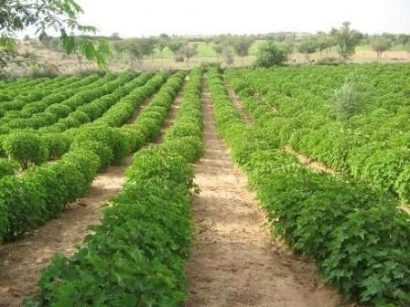
Michael Klein, Chief Development Officer for UBA was quoted stating that “Multi Purpose Real Estate is one of the newest and most promising programs that we have launched in this initiative. Essentially we offer investors that are already in or will be entering land banking market in Central America, the ability to turn land that would be otherwise sitting unused into a Bio-oil Field that generates income while their land continues appreciating.” Summarizing the project to a tee, the concept has a USP (unique selling point) that would capture the imagination of many prospective buyers.

For the estimated price of $35,000, property owners would see returns of 30% or more each year! During the span of a 5 year contract, a prospective buyer could potentially make over $100,000 yielding almost three times their investment. The properties being located in ‘hot zones’ around Costa Rica have also meant that when it comes to re-sale, the land value would be much higher than the original purchase price.

One could potentially argue the ‘what’s the catch’ aspect of the project but the reality of it is that there isn’t one! Buyers are entitled to opting out at any time by selling their land on and following a 5 year agreement will be permitted to build on the property.

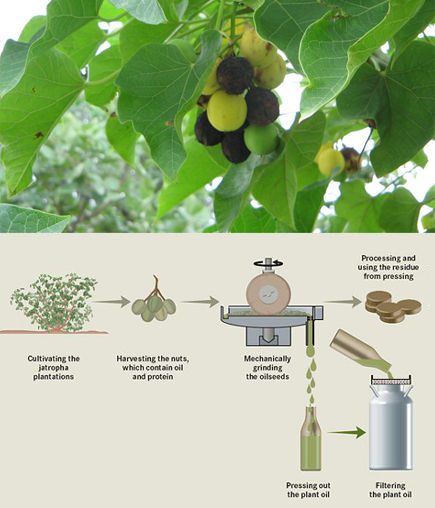
Now is the time to invest in the biofuel market for analysts predict a doubling of biofuel prices in as little as 5 years time! From an investment point of view, the current attraction is the substantial amount of return the buyer receives in the long term. With fuel resources estimated to run out during our lifetime, biofuel is the biggest investment out there. With fossil fuels fast depleting, biofuel production takes the lead. Costa Rica provides the biggest asset of the all, the crops themselves. Jatropha Curcas is a native crop originating in a town called Tempate. Exported in the 1700s, this plant has many extra uses pertaining to medicine, cosmetic surgery, latex and glycerin based products. Additionally, Costa Rica’s close proximity to major U.S cities, a stable government and currency and less stringent bureaucracy laws have made Costa Rica the perfect host to the perfect concept.
Foreign buyers’ share the same rights as local citizens, making the actual process of buying fairly hassle free. That aside, having outlined all the successes of this project, it would only seem fair to consider the potential risks involved. Though few and improbable, it is important to understand that almost every element of life carries risk. With regards to failures of the project, the two biggest issues MPRE (Multi-Purpose Real Estate) is faced with are that of natural disasters and the incompletion/ suspension of the new international airport construction. If the new international airport creation was to be deferred or cancelled then land value around the area would not appreciate as much. Similarly, if for reasons of natural disaster, a hurricane was to destroy the crops, then land will be damaged and productivity would come to a standstill leading to property value loss.

The purpose of this article is to make the public aware of such projects by highlighting their benefits and discussing their potential risks. If this article has provoked an urge to know more about such initiatives then logging on to www.costaricainvest.ie and reviewing some of the information about Renewable Energy farms will provide you with more of the answers you are looking for.

Photos from JatrophaWorld.org

By Jaz Chopra for the Costa Rica News

Monday, August 29, 2011

Some of the plants growing in NatureWalk

Pineapples


Pineapples


More Pineapples


Jatropha


Jatropha


Cocoa Pods

Saturday, July 30, 2011

Biofuels Potential to Transform the Global Economy

Dy Dr. John CK Daly for www.oilprice.com

Slowly but surely, an extraordinarily important new industry is slowly taking shape, with the potential to transform the global economy.

After years of existing largely as an environmentalist's fantasy, commercial production of biofuels for the world civil aviation industry is slowly becoming a fact, with production starting up across three continents.


The leading contenders for biofuel feedstocks are jatropha and camelina, both of which have their fervent supporters. While currently neither is capable of production at a price approaching that of Jet A1 civil aviation fuel derived from hydrocarbons, research and extensive investment are nevertheless investigating the possibilities.

While little is certain in the emerging picture, it is increasingly clear that despite the United States being one of the leading producers currently of renewable energy in the form of ethanol, that the United States nevertheless will be an also-ran in these developments.

In January 2010 Qatar Airways revealed plans to work with Airbus and other Qatari state entities to draw up "a detailed engineering and implementation plan for economically viable and sustainable biofuel production." At an event marking the launch of the Qatar Advanced Biofuel Platform consortium, airline chief Akbar al Baker hailed its European project partner as "more proactive than Boeing in experimenting with alternative fuels."

Fast forward to this March, when a European consortium of Airbus, Romanian state-owned airline Tarom, Honeywell's UOP and CCE (Camelina Company EspaƱa) announced plans to establish a bio-fuel production center in Romania to manufacture civil aviation fuel, using camelina as a feedstock.

Farther east, last month China National Petroleum Corp. announced that it had delivered 15 tons of jatropha oil to help Air China operate the country's maiden biofuel-powered test flight, tentatively scheduled for later this year. According to a posting on its website, CNPC, Asia's largest oil producer, is proving that it has the ability to produce biofuel from non-grain feedstocks to clean up the environment.

On Monday, Mozambique's Agencia Informacao Mocambique news agency announced that Sun Biofuels Mozambique, a subsidiary of U.K.-based Sun Biofuels, has exported the first batch of 30 tons of jatropha oil produced from its fields in the central Mozambican province of Manica to Germany's Lufthansa airline.

The biggest single impetus to the development of biofuels for civil aviation occurred on 8 June, when the international standards certifying body ASTM International announced its approval of its BIO SPK Fuel Standard, to be made official later in the year, allowing the use of hydro-treated renewable jet (HRJ) Jet A-1 fuel in commercial aviation.

Currently these biofuels are "drop ins," and must be blended in a 50-50 mixture with Jet A-1 fuel derived from traditional fossil fuel kerosene.

The biggest single independent meant at present to a wide scale production of jet biofuel is its inordinate cost. Biojet fuel delivered last year to the U.S. armed forces for evaluation cost more than $70 a gallon to produce, a price which obviously makes it at present supremely uncompetitive with fuel derived from traditional hydrocarbon sources. Supporters of biofuel production argue that processing costs will decrease in direct proportion to rising volumes of production.

Both Brazil and the United States have viable biofuel production in the form of ethanol, in the case of Brazil derived from sugar cane, in the United States, produced from corn.

Ironically it is the very success of this production in the United States that will limit the near term growth of an alternative renewable fuels industry, because the ethanol lobby has ensured the farmers not only receive significant subsidies, but crop insurance as well, neither of which is available to other farmers wishing to dabble in the production of biofuel from camelina or other assorted feedstocks. These limitations exist despite the fact that the U.S. is the world leader in camelina research.

What is clear at this juncture however is the fact that renewable biojet fuels have been certified, and furthermore, that production is beginning, albeit at on a limited scale with relatively high production costs.

As noted earlier in this article, a critical momentum is building on three continents to advance production of biofuels, and when major players such as Airbus become involved, the viability of such projects is no longer in question, only the timeline.

Last but not least, an additional benefit of biofuels in a world concerned about global warming and emissions of greenhouse gases is that biofuels reduce carbon emissions by jet aircraft by up to 80 percent.

The technology is in place, the product has been certified, and at the end of the day, one is talking about an agricultural product which, depending on where it is sown, can produce one or even two harvests a year.

While discussion rages about the production of biofuels in poorer nations having the possibility of diverting land needed for food production, in terms of energies impact on the environment, biofuels are certainly more benign than other more traditional forms of energy as evidenced in the 2010 BP Gulf of Mexico oil spill, or more recently, in the March nuclear debacle in Japan.

Biofuels are clean, green, and... for the moment, expensive.

To read the full artice by Dr. John CK Daly written originally for oilprice.com visit the Market Oracle by clicking here

Tuesday, June 7, 2011

Free Webinar


Our next webinar in our webinar series is on Thursday the 9th of July

Titled "Now you can own a Green Oilfield", it details our Renewable Energy Farm Investment Opportunity in the Southern Zone Costa Rica.

Combining biofuel annual income and land capital appreciation with the expertise of United Biofuels of America, gives you an unbeatable investment opportunity.

To read more and register for this free webinar, click on the following link or copy and paste it into your browser: