Showing posts with label Costa Rica Biofuels. Show all posts

Tuesday, January 31, 2012

The Future of Costa Rica: Leading Biofuel Production

By Jaz Chopra for the Costa Rica News

Over the years, terms like construction, development and real estate have failed to take into consideration the words sustainability and environmental well-being. In fact, so much so that infrastructural development tends to take place at the cost of natural resource depletion. Fast forward to 2012 and sustainable, eco-friendly development is at the forefront of modern day progression. Blame it on increased awareness of climate change or on the fact that humans have found this new appreciation for nature but biofuel production is the newest craze to hit Costa Rica!

Renewable Energy Farms are by no means a new concept, what is new however, is their rapid growth in some of the world’s most naturally abundant locations. Based upon the ideals of the above concept, Multi-purpose Real Estate is the latest project to incorporate environmental productivity with economical benefit. The company offers a potential buyer a chance to not only be owners of a self-sufficient piece of property but also offers them an opportunity in making their contribution to reducing green-house gas emissions. With added bonuses of providing local farmers with further work and helping promote a healthier lifestyle choice, property owners would own a share in a global movement. Ultimately, the question that needs answering is, what has given rise to this sudden demand for this industry? Based on EU regulations of ensuring 10% of all fuel at European pumps being biodiesel by 2020, governments in other countries are becoming increasingly open to the idea!

Central America is the ideal location for projects of this nature as there is a demand for emerging markets particularly in connection to the environment. Costa Rica, perhaps agriculturally the most prosperous of Central and South American countries has become the focal point of the bio fuel market. Combining the factors of real estate, low cost labour, biofuel markets and high yielding crop production gives way to the perfect formula for a successful business venture. UBA, formally known as United Biofuels of America have seized the opportunity and are based in Costa Rica permanently. Having joined forces with real estate developers, we have seen the birth of Multi-Purpose Real Estate.
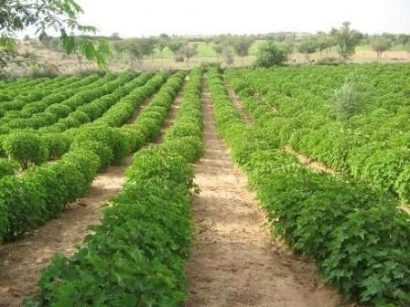
Michael Klein, Chief Development Officer for UBA was quoted stating that “Multi Purpose Real Estate is one of the newest and most promising programs that we have launched in this initiative. Essentially we offer investors that are already in or will be entering land banking market in Central America, the ability to turn land that would be otherwise sitting unused into a Bio-oil Field that generates income while their land continues appreciating.” Summarizing the project to a tee, the concept has a USP (unique selling point) that would capture the imagination of many prospective buyers.

For the estimated price of $35,000, property owners would see returns of 30% or more each year! During the span of a 5 year contract, a prospective buyer could potentially make over $100,000 yielding almost three times their investment. The properties being located in ‘hot zones’ around Costa Rica have also meant that when it comes to re-sale, the land value would be much higher than the original purchase price.

One could potentially argue the ‘what’s the catch’ aspect of the project but the reality of it is that there isn’t one! Buyers are entitled to opting out at any time by selling their land on and following a 5 year agreement will be permitted to build on the property.

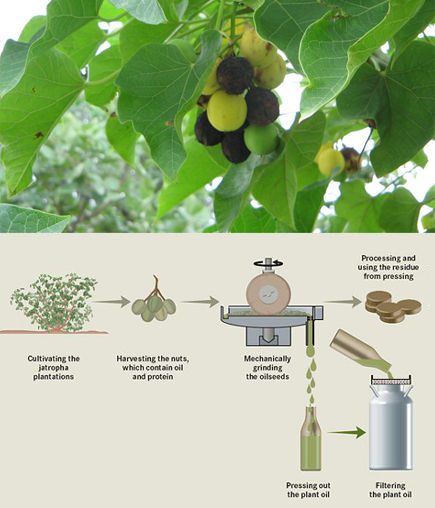
Now is the time to invest in the biofuel market for analysts predict a doubling of biofuel prices in as little as 5 years time! From an investment point of view, the current attraction is the substantial amount of return the buyer receives in the long term. With fuel resources estimated to run out during our lifetime, biofuel is the biggest investment out there. With fossil fuels fast depleting, biofuel production takes the lead. Costa Rica provides the biggest asset of the all, the crops themselves. Jatropha Curcas is a native crop originating in a town called Tempate. Exported in the 1700s, this plant has many extra uses pertaining to medicine, cosmetic surgery, latex and glycerin based products. Additionally, Costa Rica’s close proximity to major U.S cities, a stable government and currency and less stringent bureaucracy laws have made Costa Rica the perfect host to the perfect concept.
Foreign buyers’ share the same rights as local citizens, making the actual process of buying fairly hassle free. That aside, having outlined all the successes of this project, it would only seem fair to consider the potential risks involved. Though few and improbable, it is important to understand that almost every element of life carries risk. With regards to failures of the project, the two biggest issues MPRE (Multi-Purpose Real Estate) is faced with are that of natural disasters and the incompletion/ suspension of the new international airport construction. If the new international airport creation was to be deferred or cancelled then land value around the area would not appreciate as much. Similarly, if for reasons of natural disaster, a hurricane was to destroy the crops, then land will be damaged and productivity would come to a standstill leading to property value loss.

The purpose of this article is to make the public aware of such projects by highlighting their benefits and discussing their potential risks. If this article has provoked an urge to know more about such initiatives then logging on to www.costaricainvest.ie and reviewing some of the information about Renewable Energy farms will provide you with more of the answers you are looking for.

Photos from JatrophaWorld.org

By Jaz Chopra for the Costa Rica News

Monday, September 26, 2011

Costa Rica Investments in Bio-fuel, and Sustainable Agro Developments

The Costa Rica News

Central America and especially Costa Rica has seen a large surge in Biofuel initiative. There new Biofuel cooperative projects, intercropping (with food and oil bearing plants) development, including a new investment wave called Multi Purpose Real Estate, United Biofuels Of America (UBA)

Investing in bio-fuel is profitable in the short term and long term and helps reduce dependency on unstable foreign sources.

Here in Costa Rica the governmental bodies have full buy-in to renewable energy and sustainable agro developments.

Costa Rica is attempting to produce ethanol and biodiesel on a large enough scale to eventually reduce or even replace petroleum fuel. The state oil company, Recope, is constructing a large processing plant, the government is about to release a plan for the industry’s development, and the Institute for Agrarian Development, is engaged in research projects for certain products to convert to biofuels.

At present, ethanol is produced from sugar cane and to a lesser extent from yuca (cassava), a root crop. There is some production of bio-diesel from African Palm oil. Research is ongoing with respect to very promising oil seed crops for biodiesel, higuerilla and jatropha.

There is ample opportunity for investments in these crops to supply a local and international market. Petroleum prices are expected to remain at high levels. Biofuels reduce vehicle emissions when mixed with or replace gasoline or diesel. However, when biofuels are produced on a large scale there are also large scale environmental and social consequences, especially when the source of ethanol is corn or soybeans for biodiesel or when growing crops that displace food crops or convert forests to crop lands.

These adverse environmental and social consequences are mitigated when biofuel crops are grown on land that had been previously deforested and converted to cattle pasture. In Northern Costa Rica there are vast expanses of unproductive cattle pasture, much of it mechanizable and not requiring irrigation. This is a good opportunity to promote the conversion of cattle lands to socially useful and productive crops. This is already occurring with the proliferation of pineapple, root crop, and palmito plantings. However, it makes good sense to plant many more food crops there, such as rice, beans, and animal feed, while still leaving space for biofuel crop cultivation.

Presently, there is a project that involves an effort to plant thousands of hectares of jatropha in Costa Rican and other countries. The oil from the seed is converted to diesel and no modification of diesel motors is required. Yield is high, production costs for the hardy plant are low, and demand is potentially infinite, including for aviation fuel. The company engaged in the project invites equity participation, as well as offering technical assistance and production contracts to growers.

An excellent investment for animal feed is in pejibaye, a palm nut fruit that is very high in protein and other nutrients. Research on pejibaye has demonstrated that it is superior to corn or other grains for animal feed, especially for poultry. The fruit is also very nutritious for human consumption, including for baby food. Pejibaye palm is very productive, much higher yield than grains, and has a low cost of production. Costa Rica spends hundreds of millions of dollars annually in importing grains for animal feed and development of this high yield crop would be an excellent import-substitution measure and help reduce the nation’s chronic balance of payment deficits. The export market for prepared chicken feed would also be excellent. To accomplish this on a large enough scale to make a difference will require the support of the Ministry of Agriculture, the Institute for Agrarian Development, and other government planning institutions.

With recent increases in food prices Costa Rican officials and the general public has become concerned about food sovereignty, that is the cost and availability of food imports. While Costa Rica is largely self-sufficient in fruits and vegetable, dairy products, and meat and fish, this is far from the case with the basic staples of the population’s diet, rice and beans. Domestic production accounts for less than half national consumption of these staples. Corn and other grains are almost entirely imported. There is ample land for mechanized cultivation of these crops, especially in the Northern Zone.

Money Does Grow On Trees!!!!

UBA is not listed on any stock exchange, but IEA, which markets and sells renewable energy farms, is seeking to get listed on the BNV share index or in the United States within three years. So a potential green investor can either wait for IEA to become an IPO (initial public offering) or purchase one of the renewable energy farms. One farm is 1.24 acres of planted parcel real estate property that is segregated and costs $35,000. The purchase includes 800 – 1,000 jatropha and palm trees, a Costa Rican corporation (the investor owns that for tax and transfer advantages), irrigation, management, road, water and electricity. UBA will sell the jatropha oil produced on the farm and give all revenues to the investor minus a 10% management fee. The oil will be sold to a guaranteed buyer, Recope, which is the national petroleum company of Costa Rica. They have a mandate to put a 10% blend in their fuel by next year.

Based on crude prices of $90 or less a barrel, YĆ©pez says, infrastructure that is developed has an added value of $35,000 because the price of the farm doubles when facilities are added. After ten years the value will be over $120,000, giving the investor a 380% return on investment. The investor will also have $50,000 produced in revenues from the biofuel plantation. It’s a ten-year investment where you can opt out any time.

For more informaion on Multi Purpose Real Estate Investments e mail us on info@costaricainvest.ie

To Read the full story on the Costa Rica News click here