Tuesday, January 24, 2017

Outrageous Deals

Incredible deals available. Deals like these ones don't come round regularly. So they all require quick action!


Deal 1


  1. Fully furnished 
  2. 3,800 sq ft, 
  3. 3 bed , 4 bath
  4. San Vito
  5. Totally outrageous ridiculous price - $79k
  6. Quick close required. 
  7. Furnishings include modern pool table and a baby grand piano. 
  8. All bedrooms ensuite!


San Vito Home

San Vito Home

 San Vito Home


Find out more at this link: 

https://costaricainvest.infusionsoft.com/app/hostedEmail/1652608/058cbb4f8312ce37

Call us now USA +1-202-697-9284 or Europe +353-1-272-4184 if you are interested. This deal cannot hang around long at this price.

Deal 2
  • B & B
  • 7 Bed
  • US$445k
  • Escazu, San Jose
  • Focused on medical tourism
  • Gross Yield - $80,000
  • After costs  - $60,000
  • Yield 13.5%
  • Quick close required
 Casa Isabella


 Casa Isabella.


Find out more at this link: 


Call us now USA +1-202-697-9284 or Europe +353-1-272-4184 if you are interested. This deal cannot hang around long at this price.

Deal 3

  • 26ha of development land
  • Subdivided into 260 permissioned development lots
  • Plus 2.5ha of Concession Seafront Land
  • Concession land with permission to develop 65 room hotel
  • Outrageous price - $850k
  • Will suit an experience developer
 Development lots


Find out more at this link: 


Call us now USA +1-202-697-9284 or Europe +353-1-272-4184 if you are interested. This deal cannot hang around long at this price.

Friday, January 20, 2017

Tamarindo Lifestyle


We have excellent colleagues in the Tamarindo and would be delighted to introduce you to them.

Just email us on info@costaricainvest.ie or give us a call on USA +1-202-697-9284 or Europe +353-1-272-4184 and we'll connect you,

Thursday, January 19, 2017

Why this Texas doctor says Costa Rica's health care system beats the US

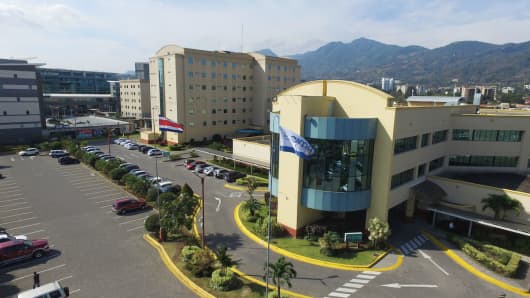
CIMA hospital, San Jose, Costa Rica.
Source: CIMA Hospital
CIMA hospital, San Jose, Costa Rica.
I was sitting on our cantilevered terrace, listening to birdsong and the river flowing below me. I pondered the 11,000-foot-tall Volcano Irazú in the distance. From the top of the tallest volcano in the country, it's possible to see both the Atlantic and Pacific Oceans on a clear day. 

Suddenly there came a rapid-fire knock at the door. I knew something was different this morning—Costa Ricans rarely get worked up. 

A neighbor, who knew I'd worked as a doctor in the U.S. before retiring to Costa Rica, wanted me to check his uncle, who was "having a problem." I found an elderly fellow, surrounded by supportive family members, who was in pain and having a nosebleed. We loaded him in my car and drove the three miles to the nearest Caja—the nickname for the local public healthcare office. 

Although the waiting room was occupied by folks waiting their turn, everyone generously ushered us to the front of the line. The old man was immediately assessed by the physician, received an ECG (to check for electrical problems with the heart), was stabilized, and later transported to a large hospital about 30 minutes away. There he was treated for his heart attack. I never saw it handled any faster when I was working in the U.S. 

When my partner and I left Texas for Costa Rica, many friends said, "Well sure, you're not worried about medical care; you're a doctor." To tell the truth, that actually makes me much more critical of the medical care available in other countries. Unlike some foreign nations, Costa Rica has nothing to worry about; state-of-the-art services are available here in all branches of medicine and dentistry. 

Costa Rica has both public and private healthcare sectors. Every town has its EBAIS (Caja) office where people from the neighborhood—expat residents as well as locals—can receive preventative and primary care. And there's no pre-existing condition exclusion. 

There are also private doctors and hospitals, just as you're used to in North America. 

"When my fishing buddy, Kenneth Thomas, needed dental implants last winter, he drove past myriad dental offices in icy Fort Worth, Texas, and flew to sunny Costa Rica. He found he could save $15,000, even after paying for the airfare and his lodgings." 

For example, CIMA Hospital in San José has it all…intensive care, all the surgical specialties, and even dental treatments. 

All at 30 percent to 70 percent cheaper than U.S. or Canadian prices. And it is Joint Commission International-certified. That's the gold standard in healthcare—many U.S. hospitals fail to receive that accreditation. And it is the only hospital in Central America that is accredited by the Department of Veterans Affairs. 

That's not to say that public hospitals aren't up to snuff. 

Margaret Aliff, an expat who lives in the San José suburb of Escazú, tells this story: "I've had three ER [emergency room] experiences in Costa Rica: one at a private hospital and two at a public hospital. I would rate all ER experiences as very good, but I thought the public hospital was more thorough both times." 

Many expats use a combination of the two systems. Donald Martin, 73, had knee surgery in Georgia some time ago that is now failing him. He needs a series of injections in his knee. He saw his Caja doctor here in Costa Rica, who reviewed the records his orthopedist sent from Atlanta. He could have waited a few weeks for an appointment within the Caja system—about the same wait time for new patients to see a specialist in the U.S. But he preferred to be seen immediately and was referred to three nearby surgeons in the private sector. 

The next day, he learned he could receive the same treatment he'd had in Georgia, but at a considerable saving. "Not only am I saving on time and airfare back to Georgia, but the cost of the injections is $400 here, as opposed to the $1,200 I was quoted there." 

While some U.S. insurance carriers won't cover costs in Costa Rica unless it's an emergency, many expats find that private insurance here is very reasonable. John and Lori Jowett have recently gotten their insurance through Blue Cross of Costa Rica. "For a premium of $462 per month, we have better coverage than we had in Florida, and at half the cost." They also point out that, because healthcare is less expensive here, the $1 million policy here buys you closer to $3 to $5 million of care. 

In addition, the country is finding new ways to help lower healthcare costs. I recently discovered a program called MediSmart. It works with Hospital Metropolitano, one of San José's private hospitals. Essentially, a couple can get deeply discounted medical services at Metropolitano by paying a $17-a-month "retainer." While normal office visits may run $40 to $50 (still a bargain, at one-third the U.S. cost), they're reduced to $14 to $18 by paying the retainer. Other costs can show similar price breaks, like a CT scan for only $320, compared to $800 in Texas. 

And expats aren't the only ones who benefit from Costa Rica's healthcare. Medical tourism is also growing rapidly. An estimated 40,000 people visit Costa Rica each year for some specific healthcare need. 

When my fishing buddy, Kenneth Thomas, needed dental implants last winter, he drove past myriad dental offices in icy Fort Worth, Texas, and flew to sunny Costa Rica. He found he could save $15,000, even after paying for the airfare and his lodgings. Smiling a new perfect smile, Thomas reveals an added benefit: "I got to enjoy a few extra days in the paradise of beaches, as well as in some of the country's numerous national parks. That will make you want to visit the dentist!" 

Commentary by John Michael Arthur, an American doctor who relocated to Costa Rica.

See the full article on CNBC here


Monday, January 9, 2017

Very Profitable Costa Rica Business for Sale

Hospitality equipment rental business located in San Jose. They have the exclusive distribution and service rights for one of the top 3 companies in that sector. 

The particular exclusive agency has the market advantage of having equipment that does better than its competitors in the climate of Costa Rica. The business, which was established in 2012, has grown very strongly and now has over 200 customers.

Current revenues are approx USD 750k. The majority of which (>90%) is recurring revenue as the 
majority of the equipment is rented on a serviced rental agreement.

Key Figures

EBITDA: USD 550k

Equipment Value: >USD 1 million

Purchase Price: USD 2 million

EV/EBITDA: 3.6x

Employees: 10

Reason for Sale: Retirement


Key Highlights
  • Highly profitable
  • Business is growing
  • Highly diversified customer base
  • Income stream from day 1
  • Tangible assets
Last Three Years Financials

                            2015A      2016F      2017F


Revenues          456k         523k          751k

EBITDA     
        337k         404k           563k

Margin                74%          77%             75%


There are significant growth opportunities. The business would require an "on the ground" manager to oversee business expansion.

E mail info@costaricainvest.ie or call USA +1-202-697-9284 or Europe +353-1-272-4184 to find out more

Sunday, November 20, 2016

Costa Rica has excellent healthcare.

By almost any standard, Costa Rica has some of the best healthcare in Latin America. There are two systems, both of which expats can access: the government-run universal healthcare system, Caja Costarricense de Seguro Social, known as Caja, and the private system. Both health systems are constantly being upgraded—new hospitals, new equipment, and improvements in staff training. 

Despite the advancements, costs are low in comparison to those in the U.S. and even some European countries. Healthcare costs are about a third to a fifth of what you’d pay in the U.S., depending on the treatment. Many doctors, especially in private practice, speak English and have received training in Europe, Canada, or the U.S. Drugs are also much less expensive. 

 Private healthcare is also available, which is affordable and high quality. There are three large, private hospitals that most expatriates use: CIMA hospital in Escazú, Clínica Bíblica in San José, and Hospital La Católica in San José-Guadalupe. All these facilities are in and around the capital of the country, San José. 

 In this private system you can pay cash or use insurance, including some policies from the U.S. and Europe, international policies, and insurance from Costa Rican companies. Health insurance from the Costa Rican government monopoly Instituto de Seguro Nacional (INS), for example, is available to legal residents, affiliated with doctors, hospitals, labs, and pharmacies in the private sector. Even if you pay cash, costs are low. Doctors, for instance, rarely charge more than $60 a visit, even for house calls. And visits to see a specialist, of which there are many in the country, will run you $80 to $100. Tests like ultrasounds are $75. And even major surgeries are half to a quarter of what they’d be in the U.S. 

 A new full-service hospital from CIMA opened a couple of years ago in Liberia, capital of the Guanacaste province. It’s just an hour or so away from northern Pacific coast beaches like Tamarindo and Playas del Coco, home to many expats. It joins a Clínica Bíblica medical center already in town. 

Statistics from the World Health Organization frequently place Costa Rica in the top country rankings in the world for long life expectancy. Arguably, one reason for this is the slower pace of living in Costa Rica. And, of course, the healthy, fresh, non-preservative-laden foods found there, and the welcoming tropical climate. Costa Rica just seems to be a healthy place to live. In fact, the Nicoya Peninsula region, on the northern Pacific coast, has been found to be one of the world’s Blue Zones. Researchers have discovered that the residents there live longer on average thanks to a combination of climate, diet, and other factors. 


Costa Rica’s Government-Run Healthcare System 

With a government-sponsored network of hospitals and clinics throughout the country, the Caja Costarricense de Seguro Social (CCSS) has primary responsibility for providing low-cost healthcare services to the Costa Rican populace. Although sometimes overburdened, this system has worked well for Costa Ricans for the past 60 or so years. Foreigners living in Costa Rica—legal residents only in one of the residence progams like pensionado or rentista—can join the CCSS and get free treatment (everything from check ups to prescription drugs to major surgeries) by paying a small monthly fee–based on income. Tourists and visitors can use Caja facilities only in emergencies.

In 2010, the government made it mandatory for residency applicants to become members of Caja. The monthly payment is 7% – 11% of the applicant’s monthly income. A dependent spouse is also covered and able to join Caja under that payment.


Costa Rica’s Private Healthcare System 

Many of the country’s highly trained physicians and some dentists work in the mornings for the CCSS and operate their own offices and clinics in the afternoons and evenings. While private healthcare in Costa Rica is more expensive than that offered by the same doctors and surgeons through the CCSS, the price is still far below that of the average office visit in the U.S. Cost for continued treatments for diagnosed problems will vary, but will almost always be considerably less than comparable treatment in the United States. Dental work, too, is provided at a much lower cost than in the U.S.– prompting a phenomenon known as “medical tourism.” Knee replacements, hip replacements, and cosmetic surgeries are some of the most popular procedures done in Costa Rica. On the dental side, implants and teeth whitening are popular. Many patients find that the entire cost of the trip to Costa Rica (including a vacation before or after treatment), including the procedure, is much cheaper than having it done in the U.S.

 Three well-known private hospitals, Clínica Bíblica, CIMA hospital, and Hospital La Católica, where many CCSS doctors practice in the afternoons and evenings, offer first-class, ultra-modern services. Affiliated with U.S. hospitals and certified by Joint Commission International, these three private providers have costs somewhat higher than the public providers but still considerably below anything found in the U.S.

 Many expats elect to use a mix of public and private care due to the wait times for certain procedures and treatments in the public system. For example, if a Caja doctor requests an ultrasound but the Caja testing facility has a wait time of a couple of weeks, the patient can get the test done at a private clinic and bring the results back to the Caja doctor. Also, many private doctors who also work in the public system can write prescriptions for Caja pharmacies so there’s no cost to the patient.


Cosmetic Surgery in Costa Rica 

A full range of cosmetic and reconstructive procedures are available in several modern clinics. With the addition of contemporary laser technology, the ability of Costa Rica’s plastic and cosmetic surgeons to provide world-class services has been enhanced. Prices are sometimes 50% lower than in the United States, but it is important to note that each case is different, and prices are quoted on an individual basis after a consultation.


Dental Procedures in Costa Rica

From simple fillings to complicated multiple implants and periodontal work, Costa Rican dentists are as qualified and skilled as dentists anywhere–and the prices are far less. This is another growing area of health tourism–foreign patients seeking dental work arrive in Costa Rica in greater numbers every year. Laboratory work, too, is much cheaper in Costa Rica, and materials used are all FDA-approved and imported from the U.S.

 *Prices as of 2015

Article courtesy of International Living